27 Wabi Sabi Living Room Ideas

Is your living room feeling a little too… perfect? Like you just walked out of a furniture showroom where nothing has a soul, and you’re afraid to actually sit on the sofa?
We’ve all been there, hovering in that awkward middle ground where you want a space that’s stylish, but the thought of keeping everything pristine makes you deeply stressed. The pristine white walls and crisp, symmetrical arrangements sometimes just feel cold, not cozy.
I totally confess that my own living room used to feel like a high-maintenance museum instead of a relaxing haven. I spent so long trying to chase “perfection” that I forgot the whole point of a home is to actually live in it.
But embracing the wabi sabi living room aesthetic changes everything. This beautiful Japanese philosophy isn’t just about décor; it’s a profound way of finding beauty in imperfection, transience, and the natural cycle of life. It’s about creating a space that feels worn in, loved, and deeply peaceful.
Imagine the sound of soft linen drapes rustling in a gentle breeze, the scent of aged wood, and the satisfying texture of raw, matte pottery cradled in your hand. It’s a sensory experience built on quiet, natural details.
The wabi sabi style gives us permission to love chipped ceramic bowls, appreciate textiles that feel handwoven and unbleached, and showcase furniture that looks naturally weathered and strong. It’s about curved lines, rough-hewn finishes, and the beauty of simple, earthy objects.
This is why interior experts often turn to wabi sabi when designing spaces meant for true relaxation. It strips away the unnecessary clutter and noise, leaving only the essential, beautiful, and authentic elements.
You don’t need a total renovation to capture this vibe! Start small, focus on the textures you love, and let go of the pressure to be flawless. This journey is meant to be fun and intuitive.
Ready to invite the beautiful quietness of imperfection into your home? Get cozy and explore these serene, grounded ideas for creating your perfect wabi sabi living room sanctuary.
Raw, Organic Textures and Light Wood
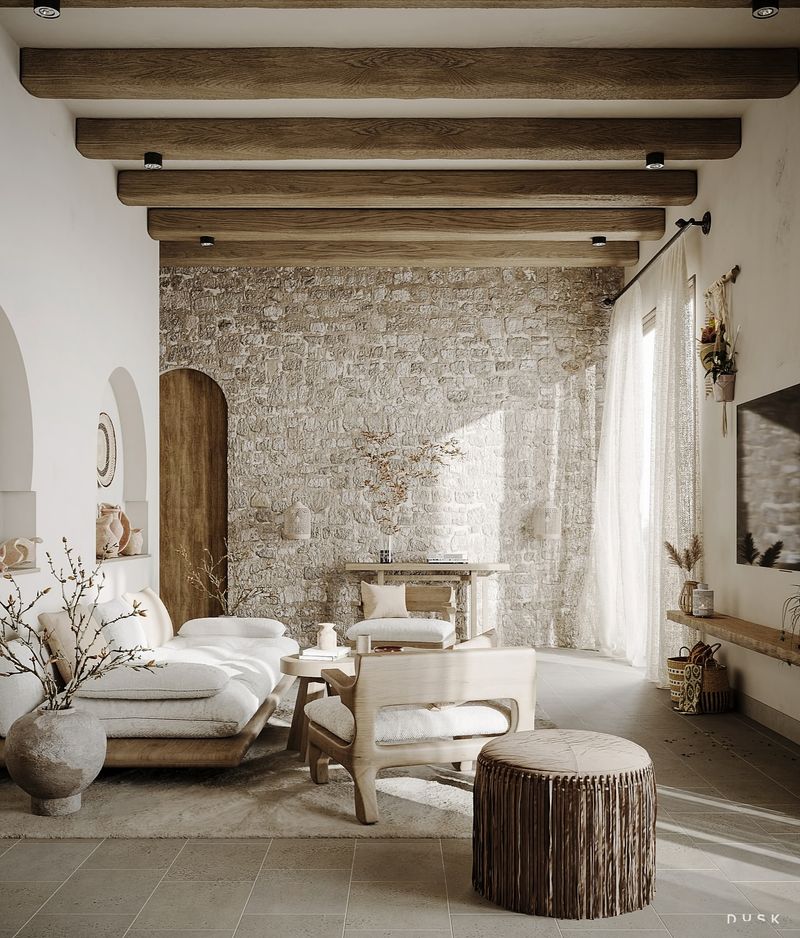
This image perfectly captures the serene harmony of raw, natural materials. We see rough-cut wooden ceiling beams balancing the beautiful texture of a stone or exposed brick wall, all contrasted with the soft, cream-colored, low-slung sofa and chair. The use of natural light filtering through sheer curtains and the presence of a few simple, organic vases and a fringe-detailed ottoman bring an immediate sense of quiet calm.
The design works because the varied textures—the rough stone, the smooth, aged wood, and the soft linen upholstery—create visual depth without needing intense color or clutter. It feels grounded, yet expansive, thanks to the high ceilings and open layout. The overall mood is one of quiet luxury and peaceful retreat, making you instantly want to slow down. To bring this home, focus on adding one substantial element of raw material, like a stone accent wall or a piece of furniture made from thick, unfinished wood.
Unconventional, Aged Pottery Vases
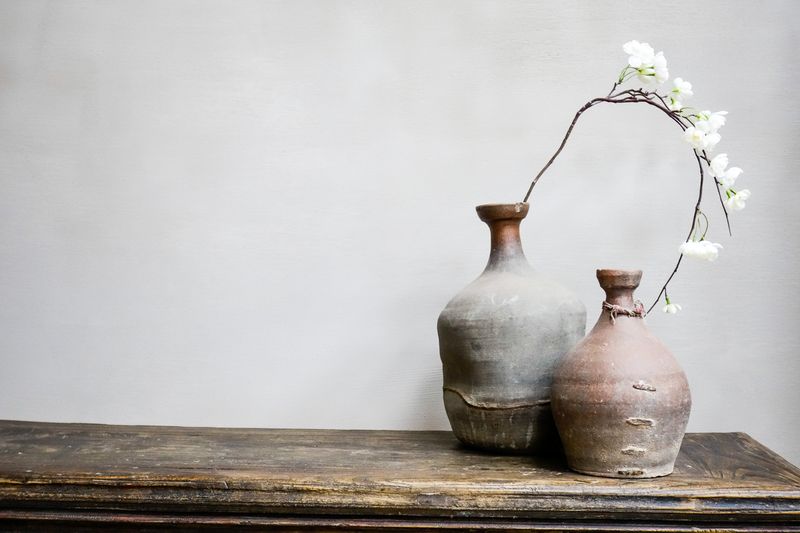
This close-up showcases the true heart of the wabi sabi philosophy in accessory choices. Two beautifully imperfect, aged ceramic vases—one gray and one reddish-brown—sit on a thick, dark, distressed wood surface. A single, delicate flowering branch arches gracefully between them, highlighting the contrast between the rough, humble containers and the fleeting beauty of the flowers.
The magic here is in the quiet dialogue between materials: the matte, slightly uneven texture of the pottery versus the glossy white petals. The vases look hand-formed, slightly asymmetrical, and genuinely old, embodying the concept of wear and tear as beauty. This simple arrangement creates a mood of contemplative quietness and natural elegance. A simple tip is to display only one or two pieces of deeply textured, imperfect pottery and pair them with simple, natural sprigs instead of lush bouquets.
Embracing the Well-Loved Leather Sofa
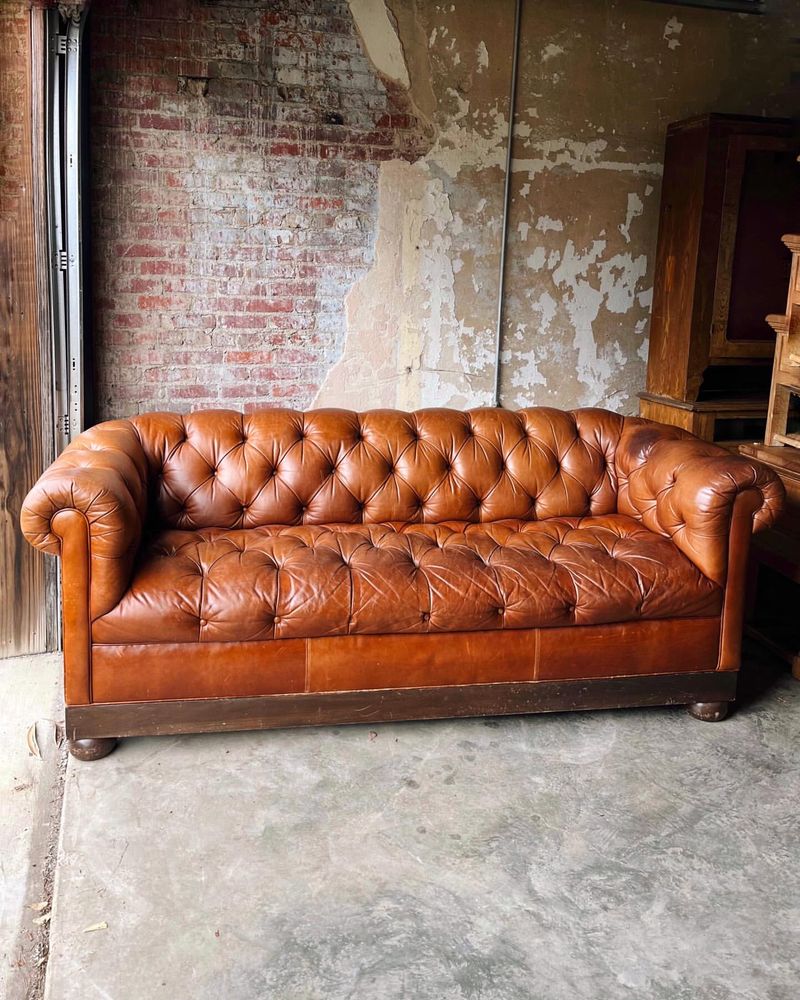
Here we see a gorgeous, deep cognac leather chesterfield sofa that has clearly lived a full life. The tufting is pronounced, and the leather shows the wrinkles, variations, and patina of age, set against a backdrop of exposed brick and distressed plaster. The floor is industrial concrete, and the setting suggests a reclaimed, artistic, or loft-style space.
This design works because it defiantly rejects newness and uniformity; the crackled leather surface tells a story and is visually rich with texture. It creates an atmosphere that is rugged, comfortable, and sophisticatedly bohemian—the kind of space where creativity is encouraged. You can recreate this feeling by sourcing vintage or pre-owned leather furniture and allowing it to be the well-worn centerpiece of your room.
Simple, Distressed Wood Coffee Table
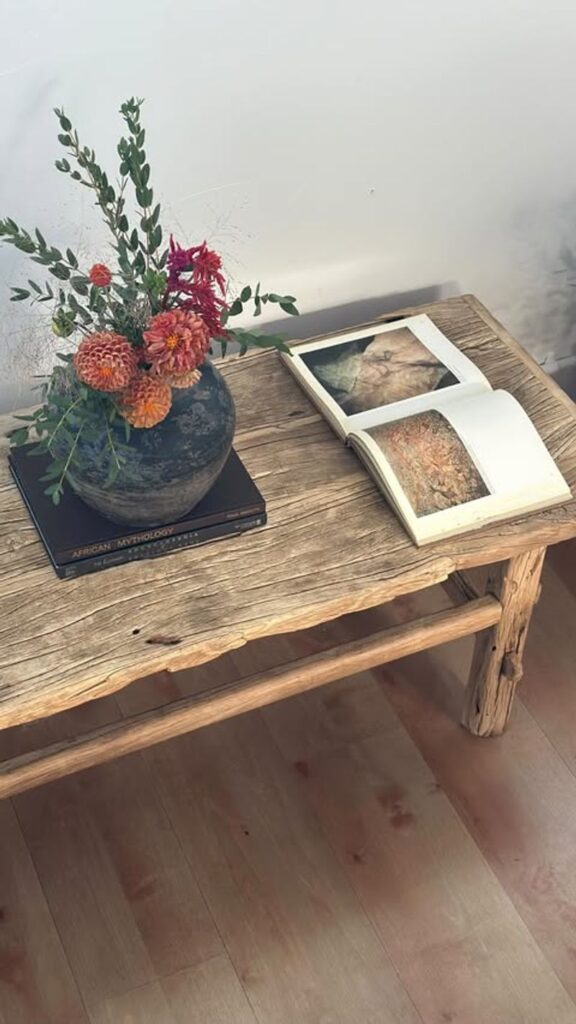
This image highlights a close-up of a small, rectangular coffee table or bench made from heavily distressed, natural wood. The grain is pronounced, the surface is rough, and the structure is visibly simple. It’s styled with a dark, low-slung vase holding deep orange flowers and green foliage, along with a few thick books laid open.
The beauty of this design lies in its honesty and palpable texture; you can almost feel the roughness of the wood under your fingertips. It keeps the energy of the space grounded and humble. The contrasting textures of the chunky wood and the vibrant, organic flowers create a warm, inviting mood of everyday elegance. Look for raw wooden furniture with visible knots, cracks, or natural discoloration, and use a low vase to keep the focus on the surface.
Vintage-Inspired Accent Table with Character
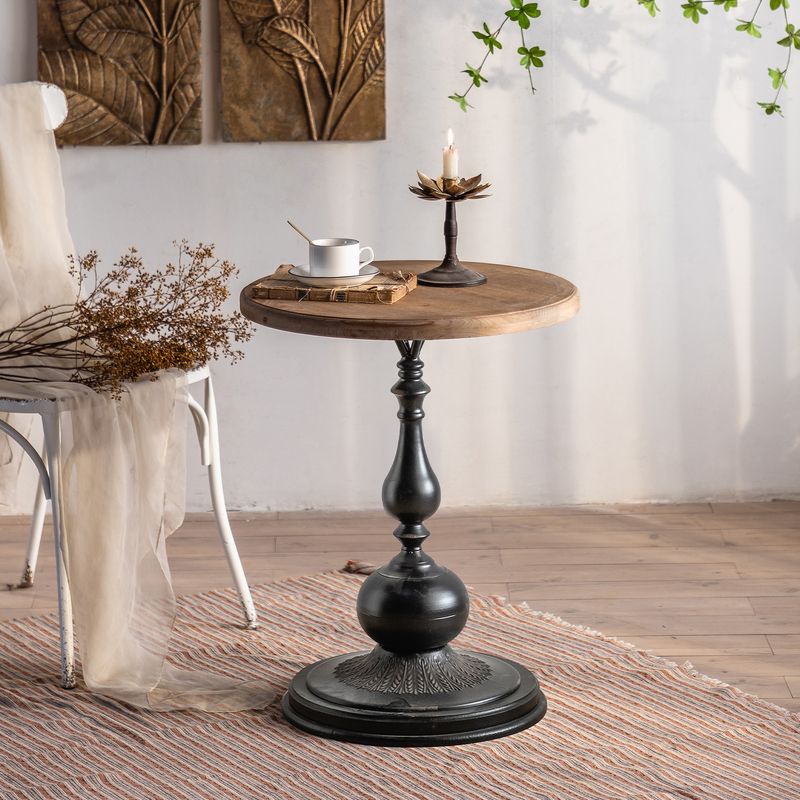
Showcasing an exquisite pedestal accent table, this image features a dark, ornate, sculptural base topped with a simple round wood slab. It is styled with a simple white teacup, a book, and a tall, metal candle holder shaped like a lotus flower. Dried sprigs lean casually against a white distressed chair in the foreground.
The table itself is a perfect wabi sabi find, mixing formality with decay—the base has a vintage, almost gothic feel, while the wood top is simple and rustic. This juxtaposition creates a sophisticated, romantic, and slightly melancholic mood, suggesting quiet moments of contemplation. Search for furniture that mixes two contrasting, well-loved elements, such as raw wood and heavily patinated metal.
The Textured Fireplace and Exposed Beams
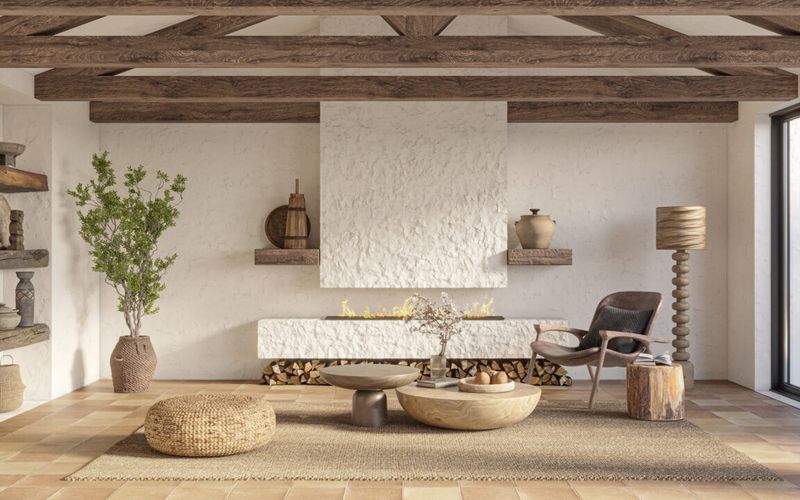
This beautifully balanced living room features robust dark wood beams across the ceiling and an incredible white fireplace with deeply textured, rough-hewn plaster. A horizontal firebox sits above a storage space for split logs, and the furniture is low-slung, featuring natural materials like a woven pouf and round, wooden coffee tables.
The design works by masterfully combining different shades of warm neutrals and organic shapes. The fireplace is an architectural focal point that clearly celebrates imperfection through its hand-troweled, textured finish. The room feels incredibly cozy and earthy, like a peaceful, sun-drenched sanctuary. Consider replacing a standard mantel with a rough, textured stucco or plaster finish for an instant wabi sabi upgrade.
Moody Stone Fireplace and Sculptural Shapes
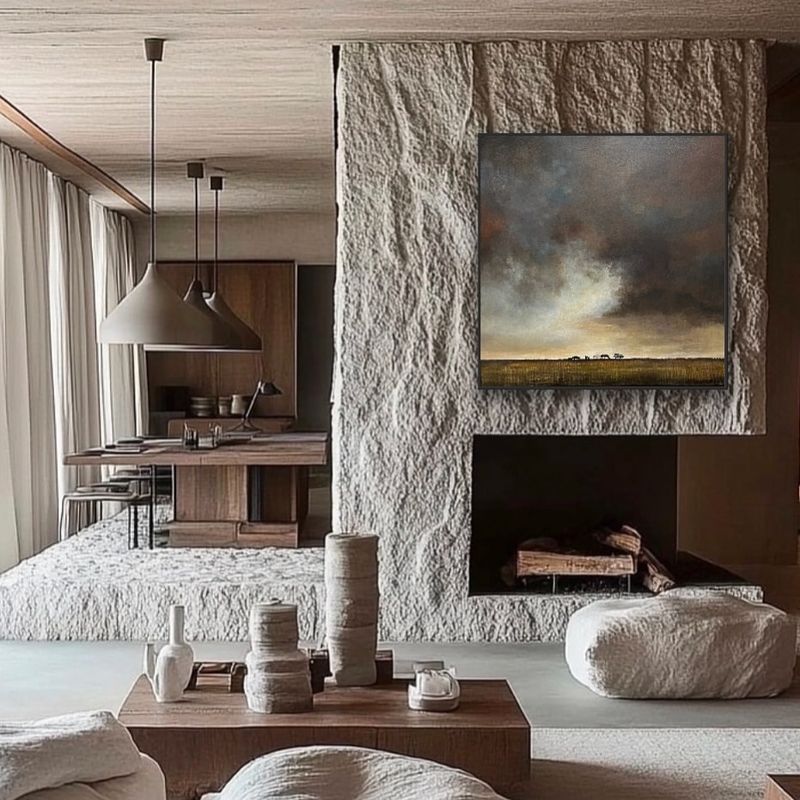
A dramatic and moody space, this living room features a magnificent fireplace wall built from rough, stacked natural stone. An abstract landscape painting hangs above the firebox, with large, sculptural ceramic vessels placed on a wooden coffee table in the foreground. The floor is covered in a soft, low-pile, shaggy rug that softens the sharp stone textures.
The power of this design comes from its contrast: the deep, organic texture of the stone against the soft, almost shapeless cushions and rug. It evokes a feeling of quiet drama and deep, primal comfort, like being safe within a warm cave. To emulate this, look for accessories, like those large ceramic vases, that have imperfect, elongated, and sculptural forms to add depth.
Perfectly Imperfect Gilded Décor
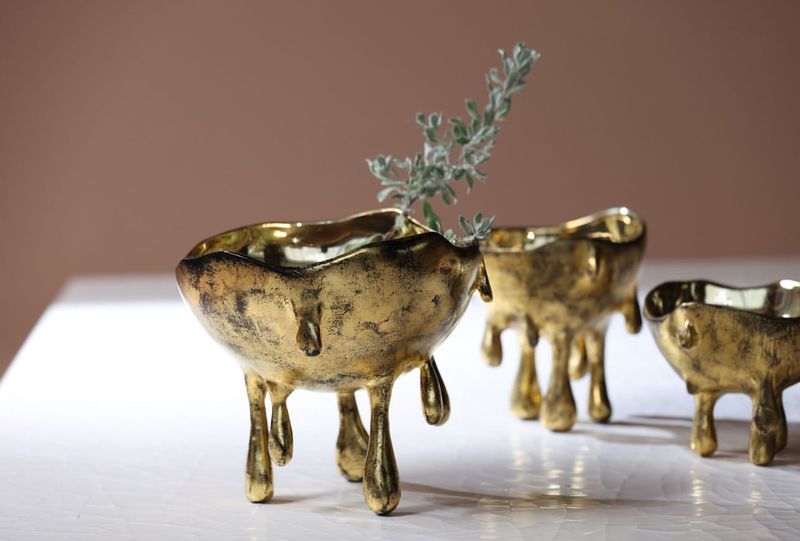
This close-up features three small, decorative bowls that resemble organic life forms or dripped gold. The bowls have an uneven, matte gold finish that looks worn or slightly oxidized, sitting atop an off-white surface. A small, muted sprig is placed in the main bowl.
The design works because it incorporates an element of luxury (gold) but presents it in a way that is utterly imperfect, cracked, and flowing—it’s gold with soul. This playful, slightly surreal aesthetic adds a touch of whimsical antiquity to the space. Look for accessories that look like they’ve been handcrafted or imperfectly finished, even if they feature metallic elements.
Found Objects and Distressed Mirrors
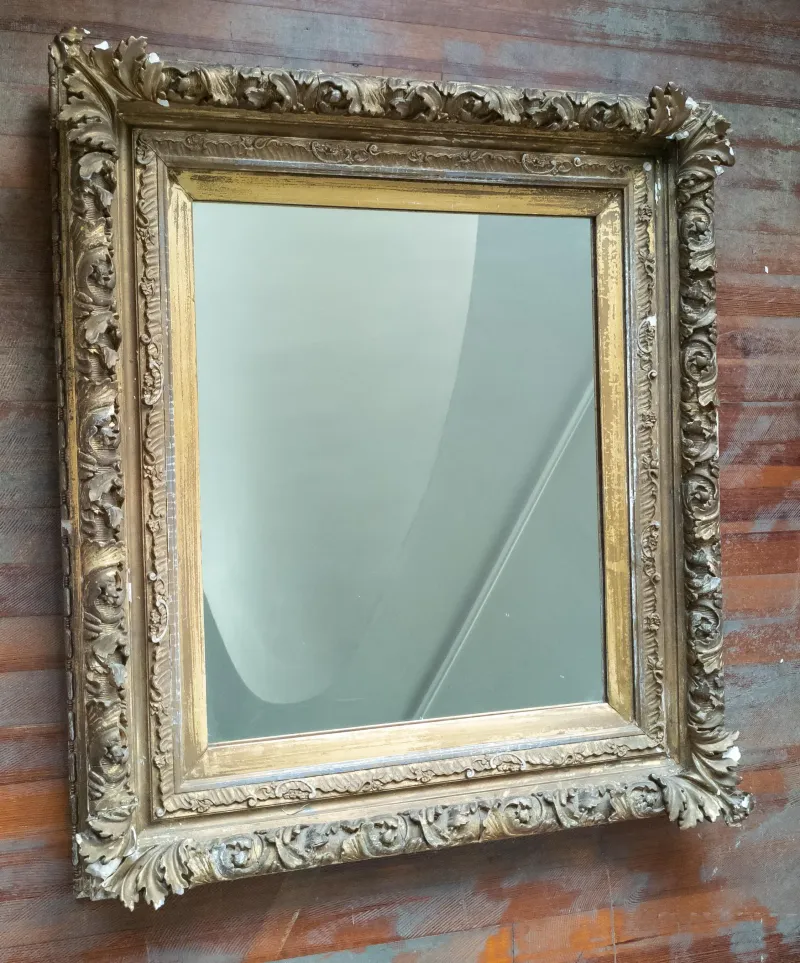
Showcased here is a large, square mirror in a heavy, highly ornate gold frame with visible signs of wear, including chipped paint and distressed detailing. The mirror is leaning casually against a wall with textured, aged wood paneling in muted, earthy tones.
The essence of wabi sabi is beautifully captured by the aging process visible on the frame; it honors the passage of time and the beauty of decay. The mirror adds a touch of Baroque elegance, but the chips and imperfections ground it. This accessory creates a mood of nostalgic richness and artistic decay. A simple way to introduce this is to find a vintage mirror with an elaborately carved frame and embrace its flaws instead of restoring it.
Minimalist Furniture and Raw Art
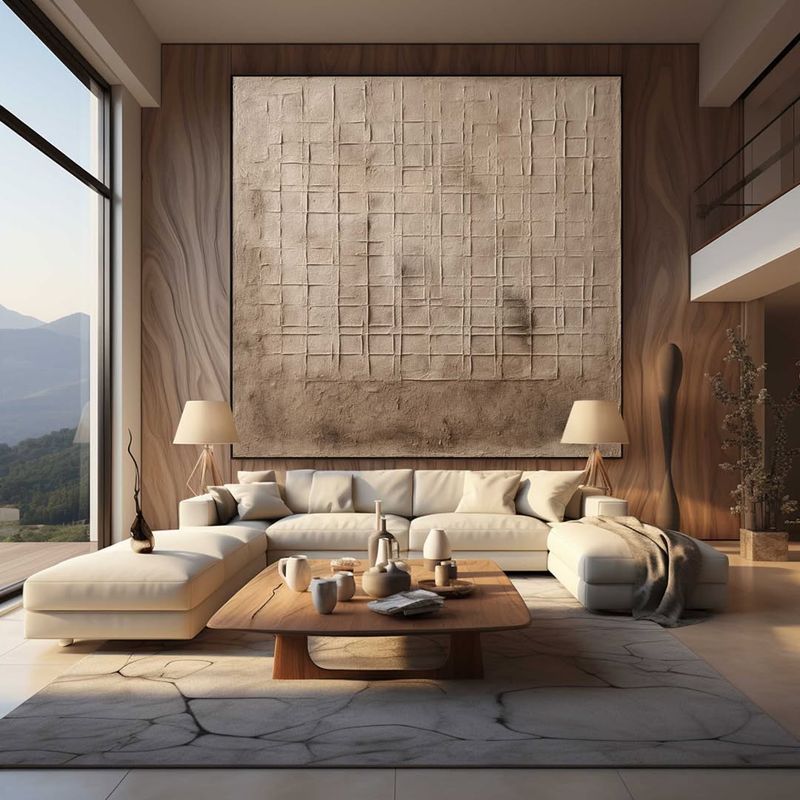
This bright and airy living room features a huge, monolithic piece of art with a highly textured, grid-like pattern, hung on a paneled wood wall. The seating is a modern, light cream sectional sofa with minimal lines, accessorized with simple vases and a chunky wood coffee table.
The visual impact is created by the large-scale texture of the artwork, which instantly draws the eye and emphasizes raw, tactile quality over complexity. This space feels incredibly serene, sophisticated, and grounded by the horizontal lines and earthy tones. Seek out large-format abstract art or canvases with heavy, visible texture in neutral shades to anchor your main wall.
Celebrating Simple, Aged Wood Furniture
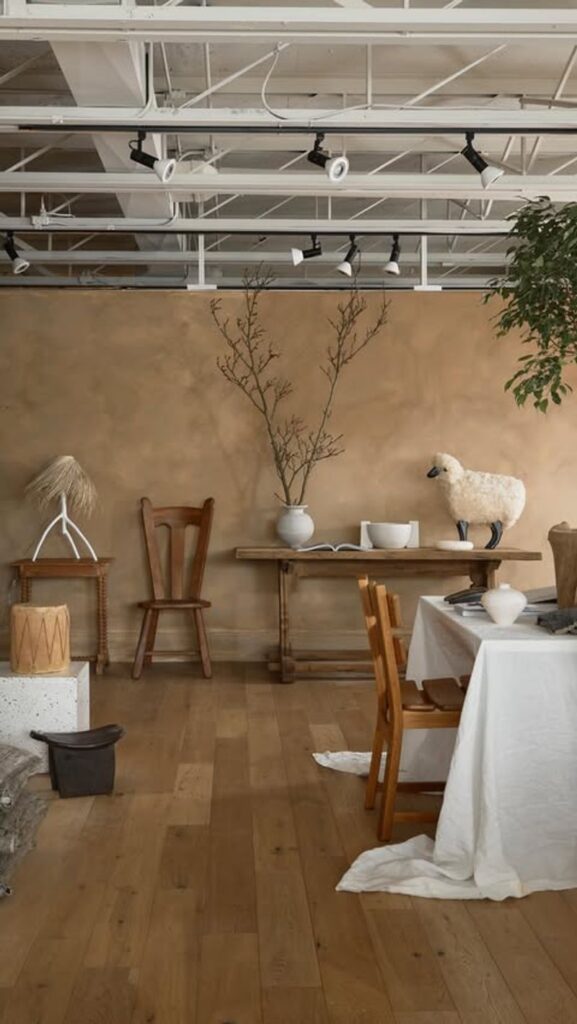
This eclectic space mixes a variety of natural elements and simple furniture forms. We see a rustic dining or console table holding a vase with bare branches, a chunky, humble wooden chair, and an adorable sheep figurine. The wall is a soft, earthy brown plaster, and the ceiling shows industrial piping.
The charm here is the celebration of unpretentious objects; the wooden chair is simple and functional, and the table has an aged, worn patina. The mix of simple, utilitarian furniture with artistic touches creates an intellectual and collected mood. Focus on finding wooden furniture pieces with straightforward, classic shapes and noticeable signs of age or craftsmanship.
Handwoven Macrame Wall Art
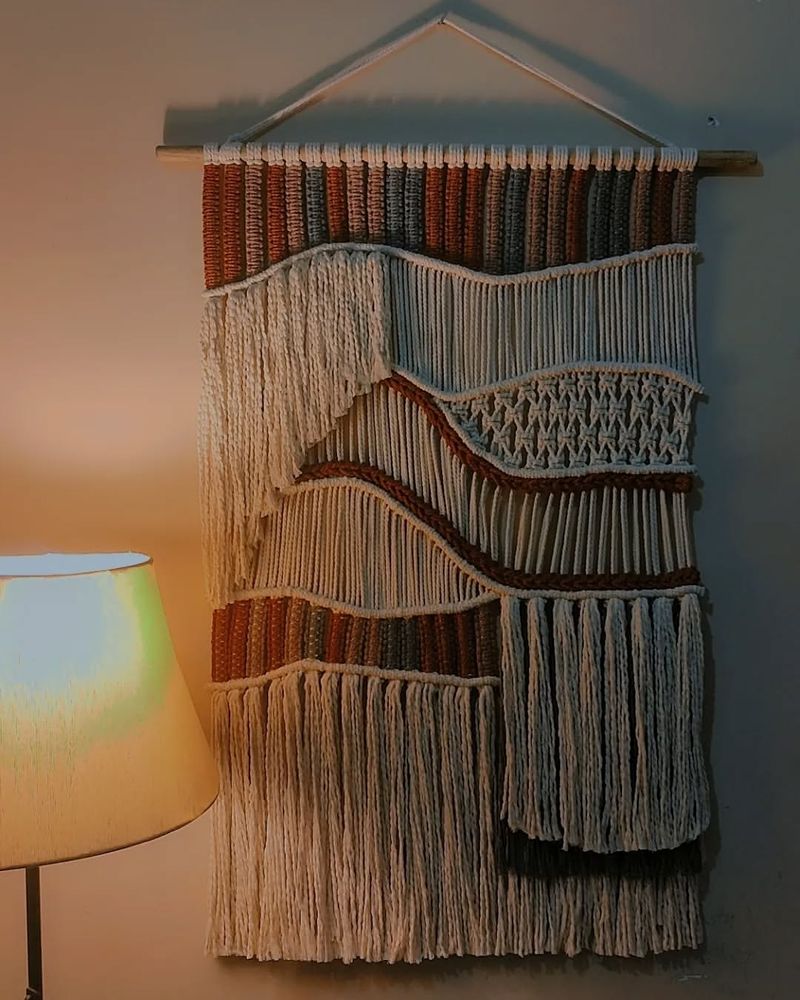
A close-up of a large, beautiful macrame wall hanging is featured, showcasing varied weaving techniques, textures, and neutral colors (cream, beige, rusty terracotta). The raw rope hangs down in fringe at different lengths, creating an organic, wavy pattern.
This piece works because the handcraftsmanship and the natural material of the rope add warmth and softness to the wall, immediately feeling cozy and authentic. The mood is creative, textile-rich, and utterly natural. To get this look, use handmade wall hangings that incorporate natural fibers and irregular, organic patterns instead of mass-produced artwork.
Deeply Grounded Low-Slung Seating
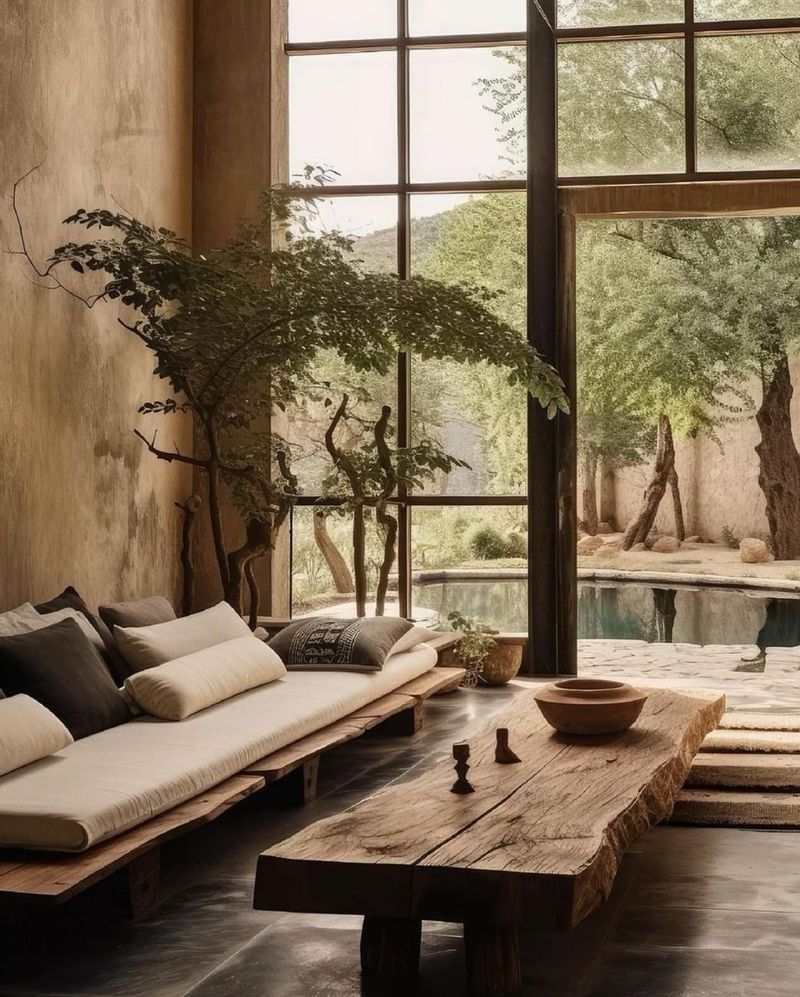
This striking room features enormous, window-like doors opening directly to a serene outdoor space. The interior is anchored by a very low, thick wooden platform bench serving as a sofa base, topped with neutral, soft cushions. The coffee table is a single, heavy, raw-edged wooden slab.
The design emphasizes connection to nature, using the deep, dark floor and the heavy, unrefined wood elements to feel intensely grounded. The low height of the furniture forces a more relaxed, reflective posture, creating a mood of deep tranquility and Zen retreat. Opt for floor seating or platforms rather than tall sofas to bring the eye level down and enhance the feeling of being close to the earth.
Organic Shapes in Lighting and Seating
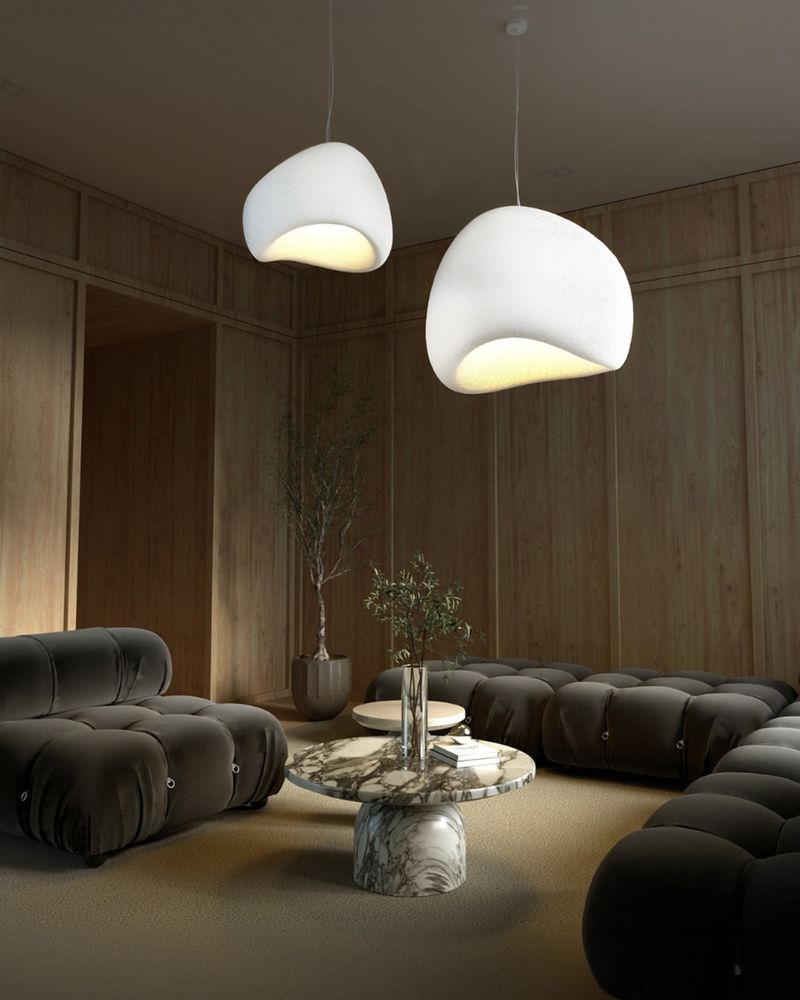
A deeply textured, mood-driven room with wood-paneled walls and low, rounded seating in a dark, warm fabric is shown here. The main feature is the pair of large, cloud-like pendant lights with an uneven, organic shape and a textured white surface.
These lights are the perfect wabi sabi statement; they are modern yet deeply imperfect in form, looking almost hand-sculpted. They balance the sleek paneling and the dark, soft seating to create a sophisticated, peaceful, and warm ambiance. Look for lighting fixtures or vases that have smooth, non-geometric, and perfectly asymmetrical forms.
The Softness of Natural Linen Drapes
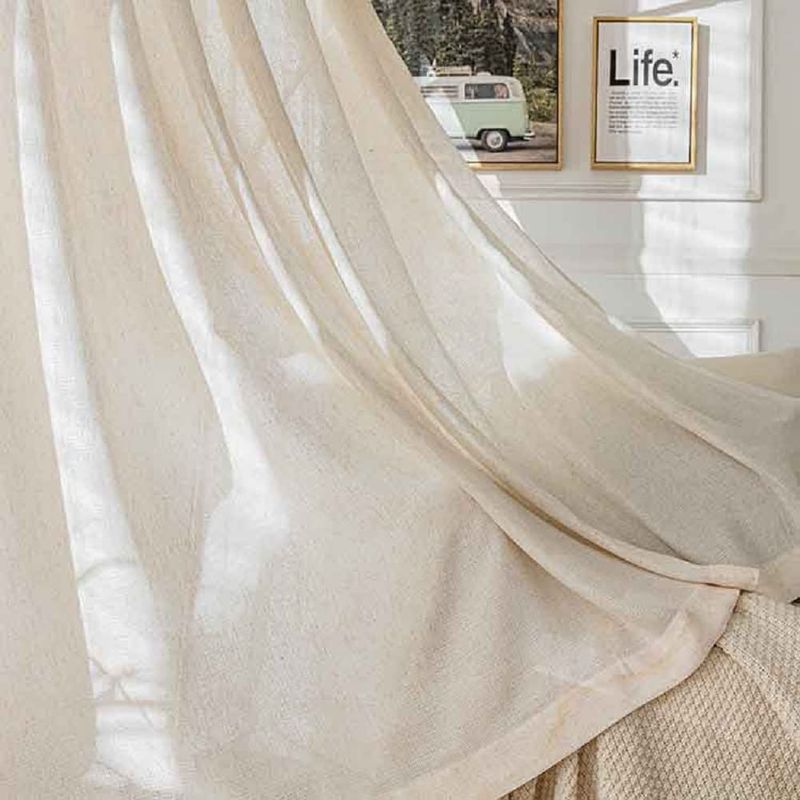
This close-up focuses on the rich texture and effortless drape of sheer, unbleached linen curtains. The fabric is light and slightly textured, allowing light to filter softly into the room, obscuring the view just enough to create privacy.
The simple elegance is powerful; linen, by nature, wrinkles and drapes in an imperfect way, which is exactly why it fits the wabi sabi aesthetic so well. The filtered light creates a dreamy, soft-focus, and wonderfully relaxing mood. Choose natural fiber curtains like linen or hemp in a cream or off-white color, ensuring they are slightly too long so they puddle beautifully on the floor.
Rustic Wooden Bathroom Shelving
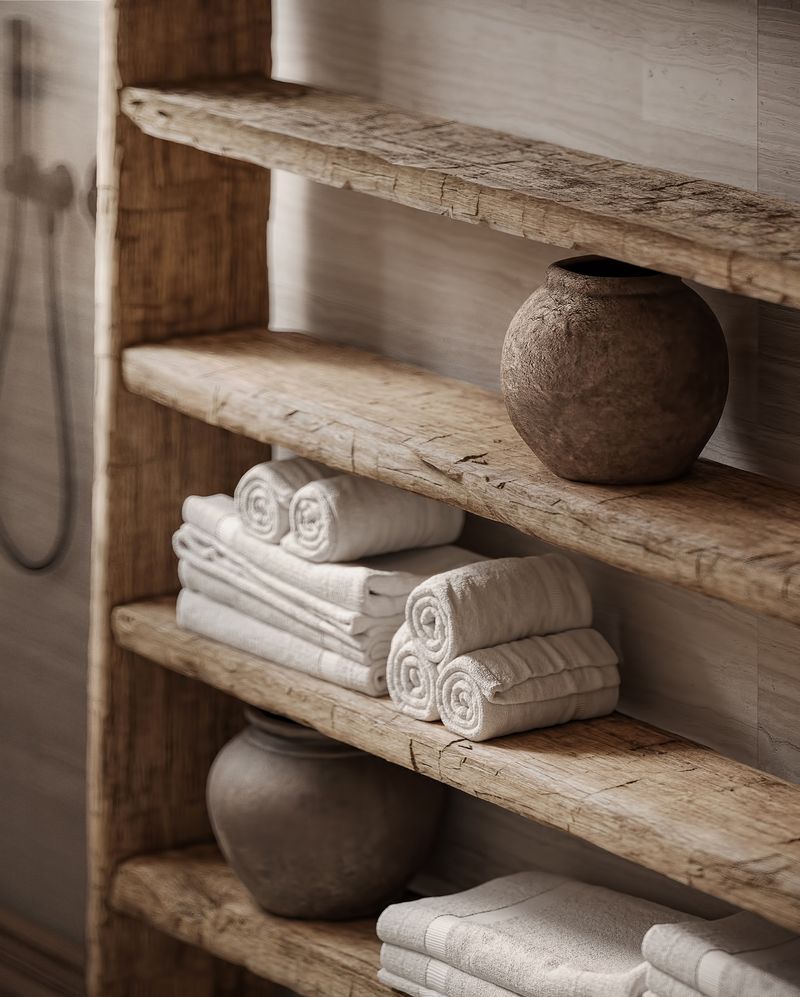
While this appears to be a bathroom detail, the concept applies everywhere. It features three rough-hewn, thick wooden shelves with visible cracks and grain. They are minimally styled with rolled white towels and two earthy, dark ceramic vessels, emphasizing utility and material authenticity.
This composition works because the ruggedness of the shelves contrasts beautifully with the soft, clean white towels, highlighting the beauty in the functional and the aged. It creates a mood of rustic, simple comfort and utility. For any room, use thick, reclaimed wood shelving and avoid over-styling, leaving empty space to emphasize the beauty of the materials.
Simple, Primitive Wood Stools
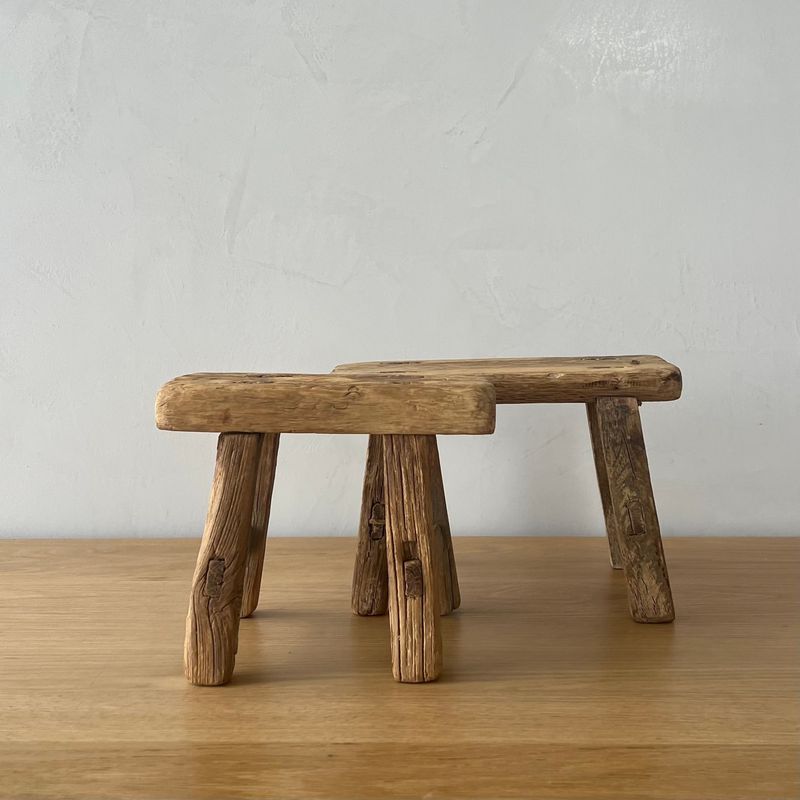
This image captures two small, primitive-style wooden stools sitting side by side on a light wood surface, against a textured white wall. The stools are clearly handmade, with uneven legs, visible joinery, and a worn patina.
The stools are a wonderful expression of humble, utilitarian beauty; they are simple, honest, and show their making process. They add a touch of charming, raw simplicity to any corner. Use small, handcrafted, or antique wooden stools as accent pieces, side tables, or plant stands to introduce a touch of genuine rusticity.
Firewood as Functional Décor
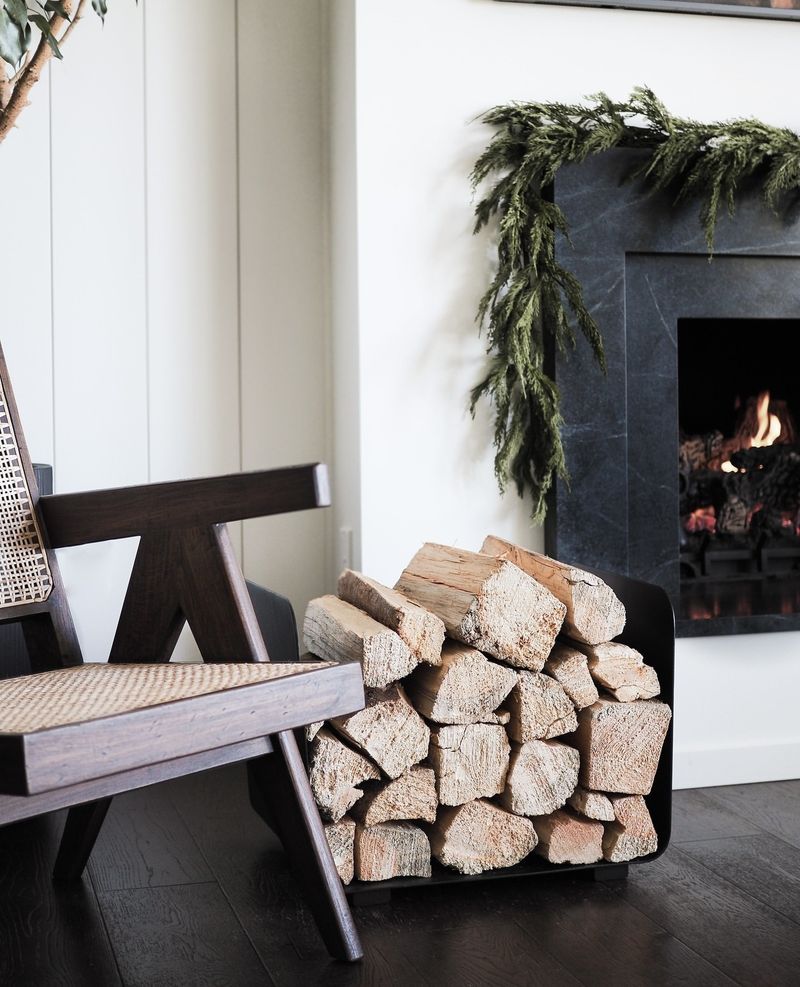
This cozy detail features a stack of neatly cut firewood resting in a simple black holder beside a dark stone fireplace, which is adorned with a simple green garland. A wooden chair with a cane seat is visible in the foreground.
The simple log pile transforms a necessity into a beautiful textural element, celebrating nature and function in a chic, effortless way. The combination of dark wood, black stone, and the rough texture of the logs is incredibly grounding. The mood is warm, elemental, and inviting. If you have a fireplace, use a modern, simple metal holder for your logs and keep the stack neat to make it a feature.
Embracing Natural Light and Earthy Plaster Walls
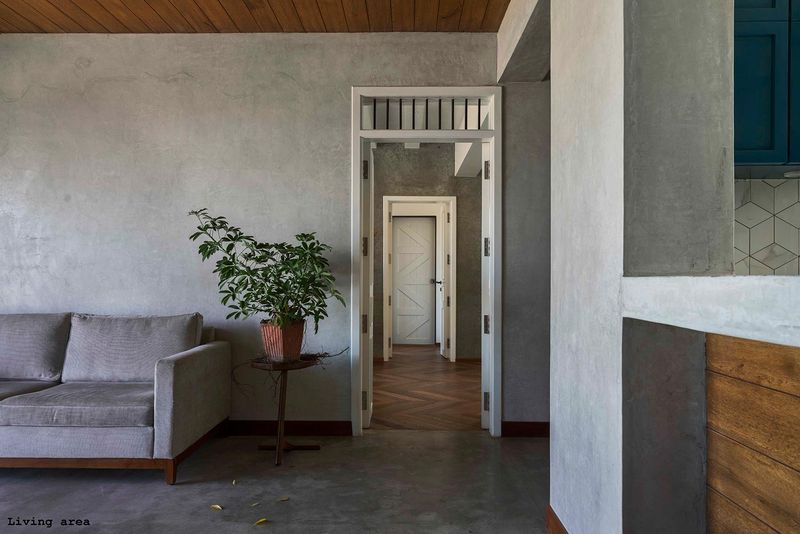
This view of a living area shows soft, light-gray concrete or plaster walls, contrasting with warm, dark parquet flooring and a wood ceiling. A simple, comfortable sofa and a single potted plant are visible in the corner. The focus is on the long hallway leading into the space, which is framed by simple white doorframes.
The use of exposed, raw materials like the plaster walls and the concrete floor keeps the space feeling humble and authentic, emphasizing texture over pattern. The clean lines of the white doors and the warmth of the wood ceiling create a balance that feels sophisticated yet profoundly calm. To achieve this, opt for matte, textured wall finishes in neutral grays or beiges instead of bright, flat paint.
Imperfect Vignettes and Raw Benches
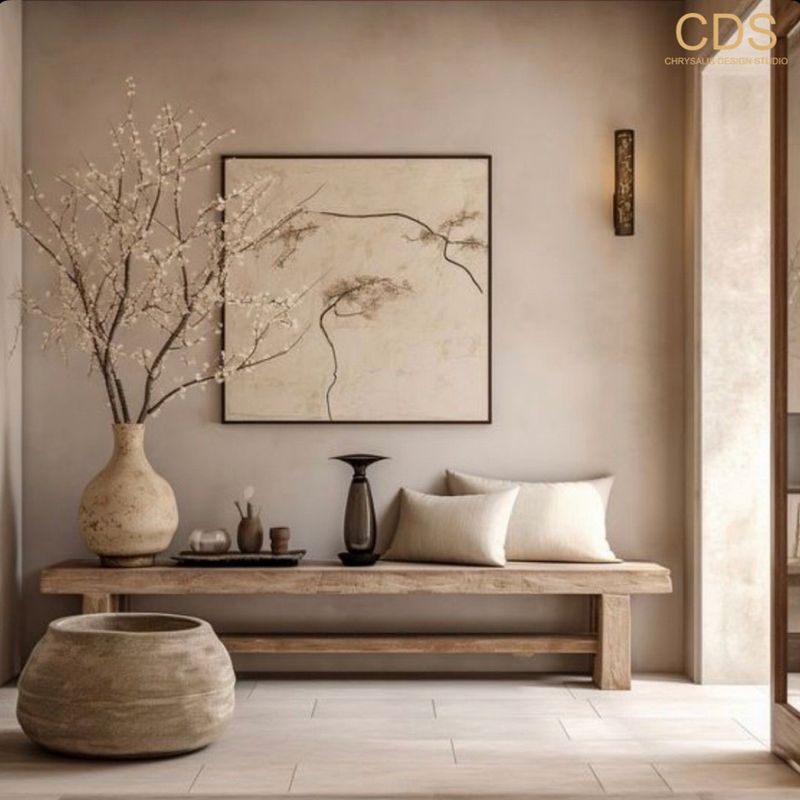
This beautiful vignette shows a long, simple, wooden bench against a matte, beige wall. It is styled with large, irregular vases, a blossoming branch, a few dark, sculptural objects, and simple linen pillows. The floor is light and tiled, and a subtle abstract painting hangs above the bench.
The charm lies in the collection of non-matching, organically shaped objects and the prominent, slightly asymmetrical branch that celebrates transient beauty. The display creates a mood of serene, artistic minimalism. Curate a corner in your living room using a low, natural wood bench and style it with 3–5 items of contrasting height and material (clay, wood, dark glass).
Reclaimed Wood Shelving and Greenery
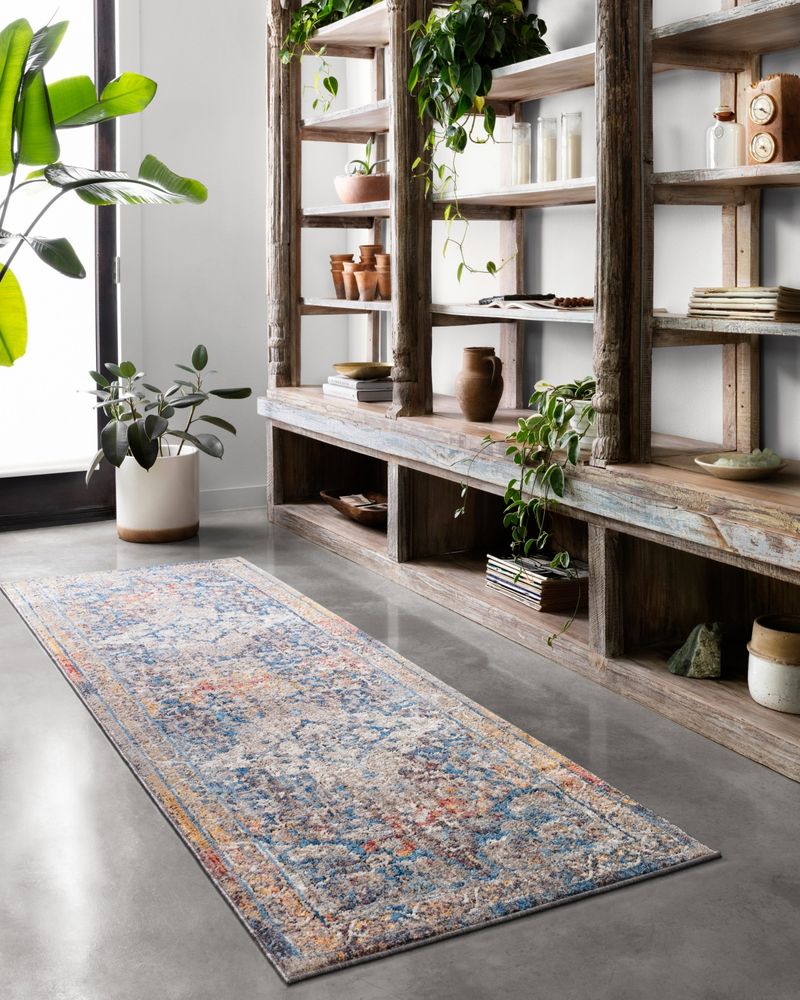
This bright room features a stunning, tall shelving unit made from thick, raw, reclaimed wood that looks beautifully weathered and aged. The shelves are sparsely decorated with various pottery, books, and climbing greenery. A patterned runner rug adds a subtle layer of color on the concrete floor.
The visual impact is the contrast between the highly distressed wood and the vibrant life of the plants, celebrating the coexistence of age and new life. The space feels natural, bohemian, and lived-in. Use reclaimed or unfinished wood for major storage pieces and allow plants to naturally trail and grow over the edges.
The Beauty of the Painter’s Studio Aesthetic
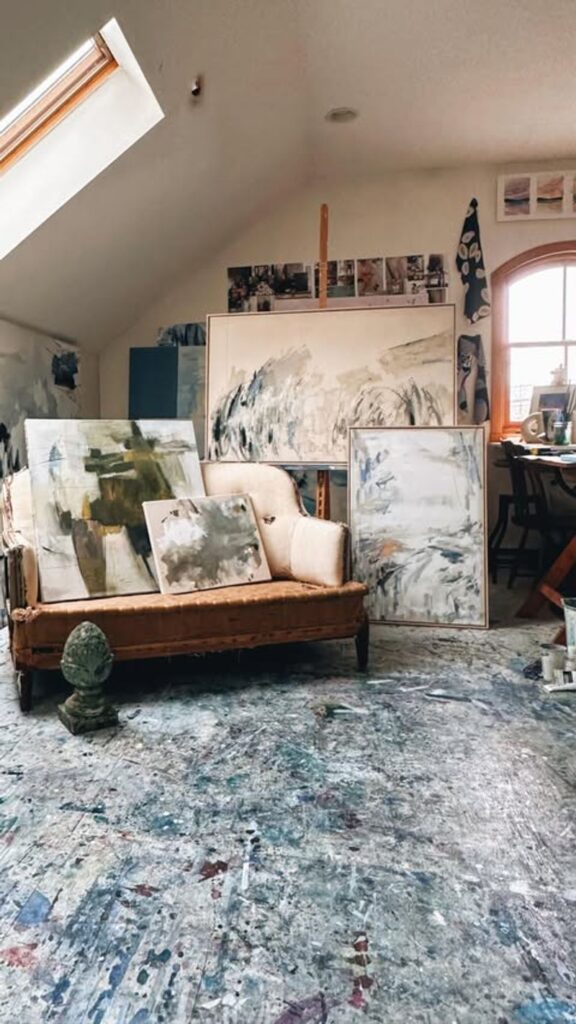
Captured here is an artistic space that feels raw and authentic, possibly a painter’s studio used as a living area. The floors are visibly splashed with paint, large, moody abstract canvases lean casually, and a small, worn antique sofa sits in the center. Natural light streams in from the skylight and window.
This is wabi sabi at its most fearless, celebrating the chaos and mess of creativity and use. The imperfections—the paint-splattered floor, the casual arrangement—create a powerfully authentic and soulful atmosphere. You can borrow this energy by embracing visible wear on your floors or incorporating large, moody, abstract paintings with minimal framing.
Handwoven Baskets and Natural Containers
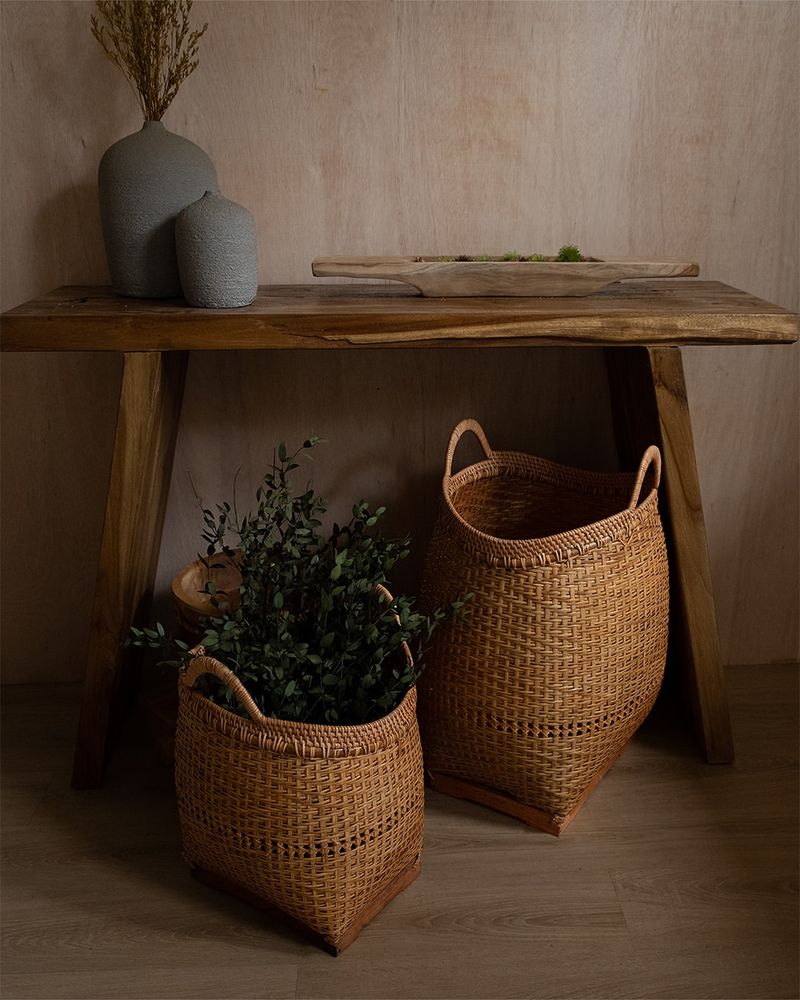
This close-up features two large, handwoven rattan or wicker baskets sitting under a live-edge wooden console table. One basket holds lush greenery. The scene is lit softly, emphasizing the texture of the woven material and the natural grain of the wood.
The varied, tactile texture of the woven baskets instantly brings warmth and a handcrafted element to the space, beautifully complementing the raw wood. This vignette creates a grounded, natural, and cozy mood. Use handwoven baskets of various sizes as planters, storage for throws, or simply as sculptural elements in your room.
Brutalist Architecture and Organic Form
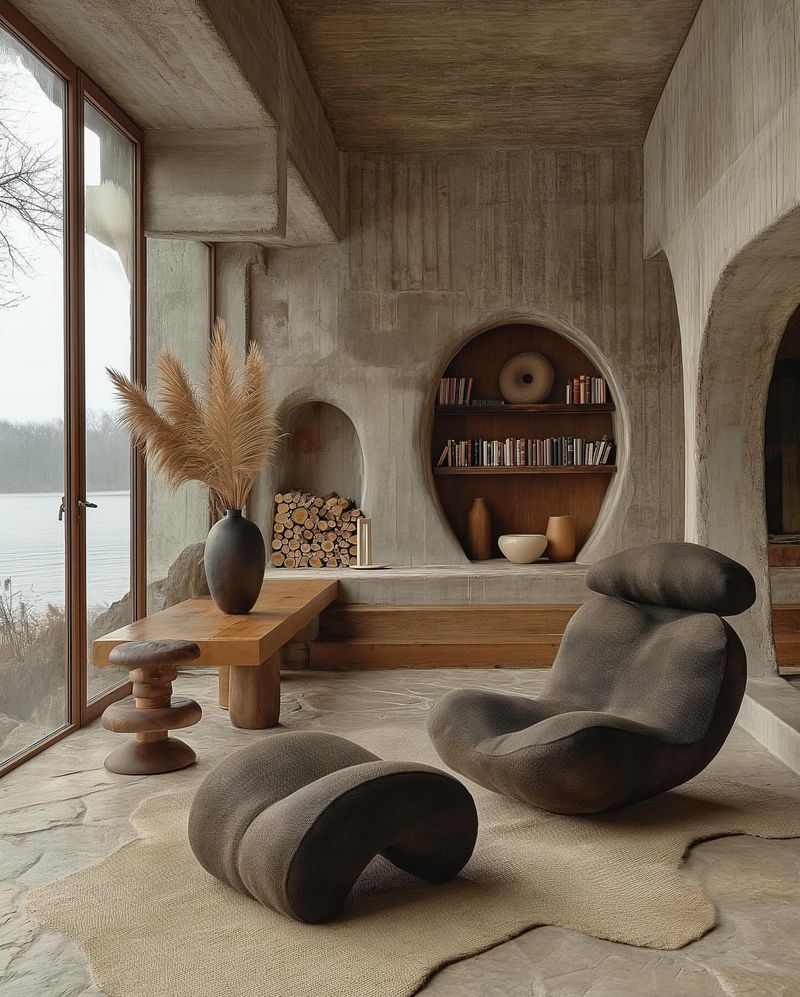
This incredible space showcases heavy, textured concrete walls and a stone floor, characteristic of Brutalist architecture, softened by organic elements. A rounded, upholstered chair, a low wooden table, and dried pampas grass in a dark vase are featured. A circular bookshelf is recessed into the wall.
The design finds beauty in the monumental imperfections of the raw concrete, using soft, natural forms (the chair, the dried grass) to balance the severity of the structure. It feels deeply atmospheric, quiet, and timeless. You can adopt this by incorporating heavy, sculptural furniture pieces with soft curves and using dried, natural foliage like pampas grass.
Sculptural, Textured White Pottery
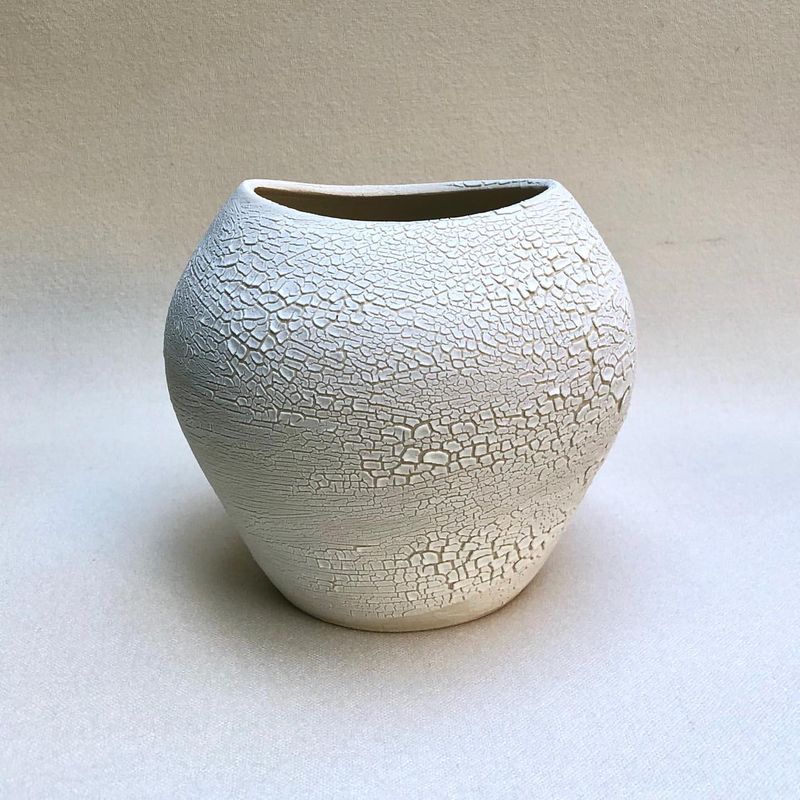
This close-up focuses on a single, white ceramic vase with a mesmerizing, crackled, highly textured surface (possibly raku or a crazed glaze). The form is slightly irregular and rounded.
The crackled texture is the star here, directly showcasing the beauty of age, imperfection, and the kiln’s spontaneous effects. The piece is a humble masterpiece. It generates a mood that is reflective, light, and focused entirely on the tactile aesthetic. Introduce a single, small piece of pottery with a noticeable crackle, uneven glaze, or visible hand-pinched marks to your coffee table or shelf.
Brutalist Architecture and Organic Form
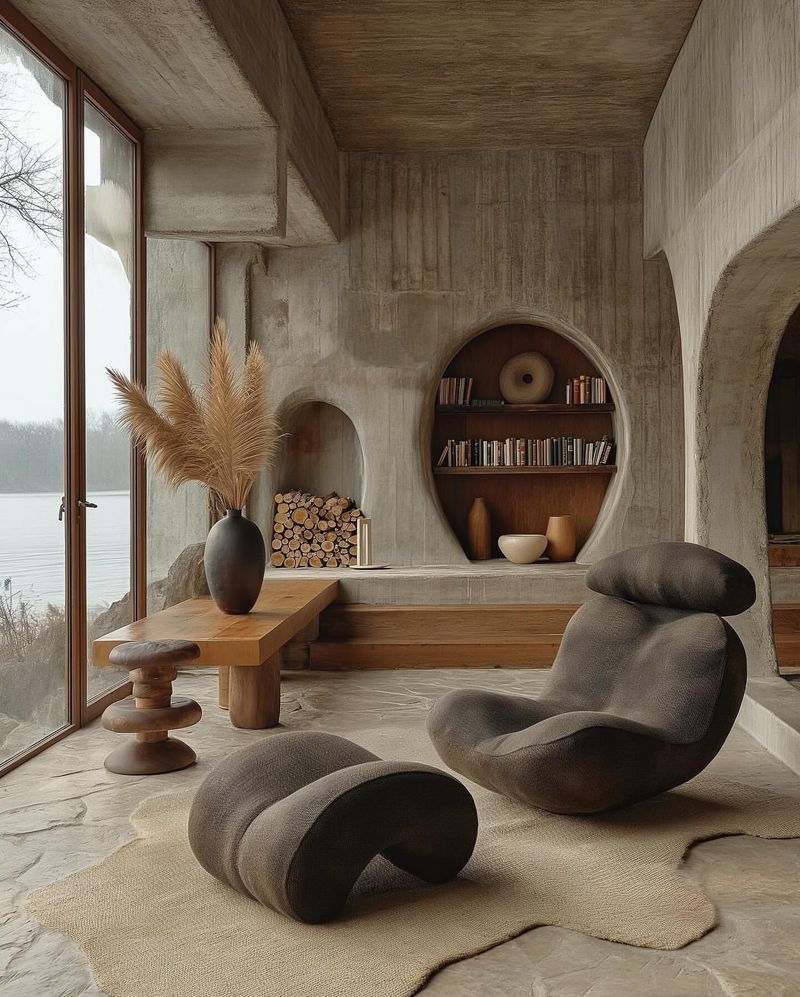
This incredible space showcases heavy, textured concrete walls and a stone floor, characteristic of Brutalist architecture, softened by organic elements. A rounded, upholstered chair, a low wooden table, and dried pampas grass in a dark vase are featured. A circular bookshelf is recessed into the wall.
The design finds beauty in the monumental imperfections of the raw concrete, using soft, natural forms (the chair, the dried grass) to balance the severity of the structure. It feels deeply atmospheric, quiet, and timeless. You can adopt this by incorporating heavy, sculptural furniture pieces with soft curves and using dried, natural foliage like pampas grass.
Sculptural, Textured White Pottery
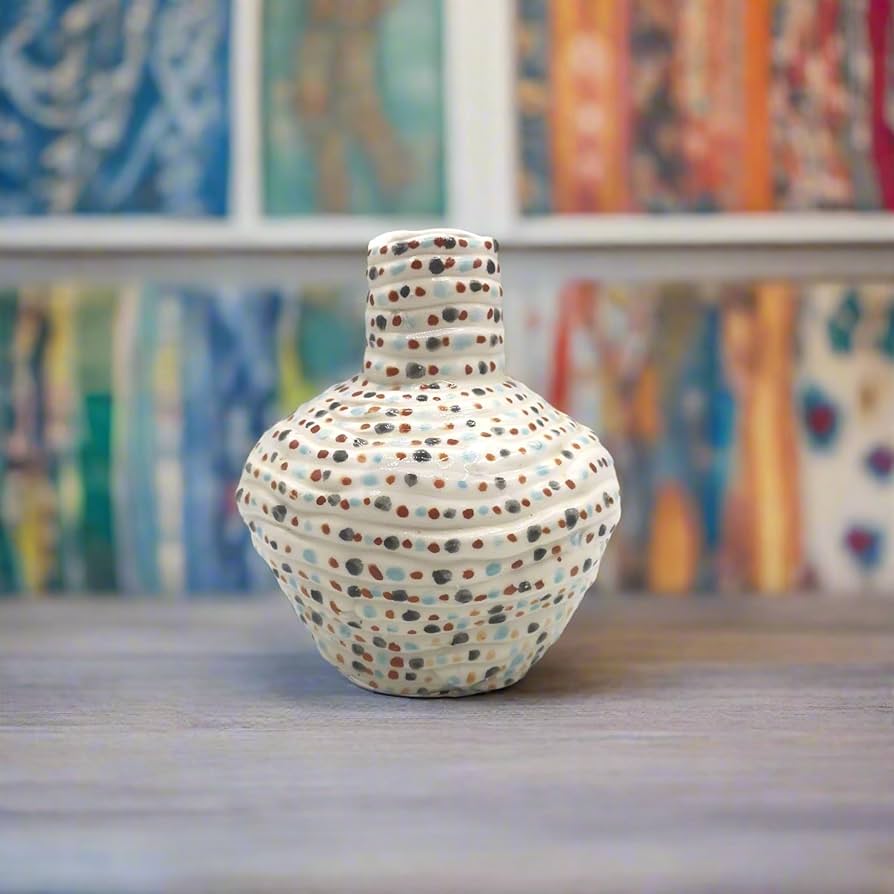
This close-up focuses on a single, white ceramic vase with a mesmerizing, crackled, highly textured surface (possibly raku or a crazed glaze). The form is slightly irregular and rounded.
The crackled texture is the star here, directly showcasing the beauty of age, imperfection, and the kiln’s spontaneous effects. The piece is a humble masterpiece. It generates a mood that is reflective, light, and focused entirely on the tactile aesthetic. Introduce a single, small piece of pottery with a noticeable crackle, uneven glaze, or visible hand-pinched marks to your coffee table or shelf.
Ready to let go of “perfect” and embrace “authentic”? The magic of the wabi sabi living room is waiting to be uncovered in the simple, beautiful objects you already own, or in the perfect piece you find with a wonderfully visible crack or chip. Don’t be afraid to mix the old with the new, the rough with the smooth, and let your home tell your honest story.
Which perfectly imperfect idea are you going to try first to bring that sense of quiet, soulful beauty into your own space?